Table of Contents

Do not index
By April 2026, the global geopolitical order has entered a state of profound
and perhaps irreversible flux. This instability is characterized not by the "swift
and decisive victory" promised by the current administration, but by a grinding, asymmetrical stalemate in the Persian Gulf. The recent, chilling statement from President Trump menacing that "a whole civilization will die" in Iran marks a definitive pivot from traditional diplomacy to a rhetoric of total annihilation.
However, beneath the bellicose posturing lies a starker reality: a superpower
that cannot conclude a conflict against a regional power within a month is a
superpower in terminal decline.
The administration’s inability to reconcile its "America First" isolationism with
an impulsive, haphazard foreign policy has created a strategic vacuum. As
Operation Epic Fury enters its second month, the costs both fiscal and moral
have begun to outstrip any potential geopolitical gain. This analysis examines
the systemic failure of the second Trump presidency, the irony of its "anti-
radical" rhetoric, and the undeniable signaling of America's downfall as the
world's sole superpower.
The Asymmetric Trap: Why a Stalled War is a Defeat
In the calculus of modern global warfare, the rules for a superpower are
different than for a regional actor. A superpower does not win by simply "not
losing"; it wins by achieving total strategic objectives rapidly and with minimal
friction. Conversely, a regional power like Iran wins by merely surviving. The
fact that the Iranian state apparatus remains functional thirty days into a
campaign that was marketed as a "48-hour surgical correction" is a
catastrophic failure of American military projection.
The administration’s failure to achieve immediate capitulation has sent a clear
message to rivals and allies alike: the American military machine is no longer
the invincible deterrent it once was. When a leader threatens that "a whole
civilization will die" and yet cannot secure a tactical surrender in four weeks,
the world stops fearing the threat and starts analyzing the weakness.
The Projection of Power vs. Reality: The administration promised a
"high-tech, low-casualty" intervention. Instead, the U.S. is mired in a
conflict where the daily cost exceeds $1.3 billion.
The "Paper Tiger" Effect: For decades, American hegemony rested on
the threat of overwhelming force. By deploying that force and failing to
achieve immediate results, the administration has inadvertently signaled
that the "superpower" is, in fact, a paper tiger.
Unified Resistance: The "erasure" rhetoric has effectively unified the
Iranian populace against an external existential threat, consolidating the
very regime the administration claimed it would dismantle.
The Haphazard Executive: A Study in Presidential Incapability
The hallmark of the current administration’s approach to the Iran crisis has
been a fundamental lack of consistency and professional rigor. We are
witnessing a level of haphazard decision-making that is unprecedented in the
modern presidency. Unlike the structured, if controversial, doctrines of the
20th century, the current strategy appears to be driven by reactionary social
media sentiment and the personal whims of a leader who views complex
international relations through the lens of a zero-sum reality show.
This "haphazard" nature is not just a personality trait; it is a systemic risk. It
manifests in contradictory orders, the dismissal of veteran intelligence officers,
and a complete breakdown of the National Security Council's traditional
functions. When a president speaks of wiping out a civilization one day and
"bringing the boys home" the next, the result is strategic paralysis.
The Breakdown of the Chain of Command
The "Scorched Earth" rhetoric was reportedly delivered without prior
consultation with the State Department or the Joint Chiefs of Staff. This lack of
institutional coordination has several dire consequences:
- Command Confusion: Military commanders are forced to interpret vague, inflammatory statements as potential orders, leading to hesitation on the front lines.
- Allied Defection: Long-standing NATO allies have begun to formally distance themselves from U.S. operations, citing the "unpredictable and genocidal" nature of recent communications.
- Intelligence Gaps: The administration’s dismissal of traditional intelligence in favor of "discredited accounts" has led to a series of tactical blunders that have prolonged the conflict.
Feature of
Leadership | Traditional
Statesmanship | The Haphazard Model (2026) |
Primary Objective | Regional Stability | Personal Ego-Validation |
Communication
Style | Calculated & Multi-
channel | Impulsive & Social-Media
Driven |
Decision-Making | Cabinet Consensus | Inner Circle / Family Loyalists |
Outcome | Managed Escalation | Uncontrolled Volatility
|
The Irony of "Radicalized Minds"
Perhaps the most jarring aspect of the current discourse is the President's
assertion that "less radicalized minds will prevail." This statement stands as a
peak of modern political irony. When a head of state threatens the death of an
entire civilization, the label of "radical" is no longer applicable only to the
opponent. The rhetoric of genocide is, by its very definition, the ultimate
radicalization.
Who is truly the radical in this scenario? Is it the regional power defending its
borders, or the global leader threatening the mass extinction of a culture? The
administration’s language does not just threaten Iranians; it threatens the
moral and ethical fabric of the United States. By moving the goalposts from
"regime change" to "civilizational erasure," the President has abandoned the
high ground of "defending democracy" and entered the territory of historical
atrocity.
This shift has served as the primary catalyst for the "No Kings" movement.
Millions of Americans recognize that a leader who can casually propose the
destruction of another culture is a leader who no longer respects the sanctity
of life or the limits of executive power.
Economic Suicide: The "OBBBA" and the Cost of Incompetence
The domestic fallout of this foreign policy failure is inextricably linked to the
One Big Beautiful Bill Act (OBBBA). As the administration pours resources into
a conflict that Iran is successfully dragging out, the U.S. economy is reaching a breaking point. The national debt has increased significantly since the passage of the OBBBA, and the war in Iran is acting as an accelerant to this fiscal fire.
The "America First" base, which was promised an end to foreign entanglement and a focus on domestic infrastructure, is now watching their tax dollars vanish into the Persian Gulf.
Inflationary Pressures: Fuel and grocery prices have risen by 22% in the
last quarter alone, driven by the instability in the Middle East.
The Debt Ceiling Crisis: With a $40 billion monthly war price tag, the
Treasury is effectively "cannibalizing" domestic social programs many
already weakened by OBBBA cuts to fund a conflict that has no exit
strategy.
Voter Betrayal: The very people who voted for a non-interventionist
policy are now witnessing the most radical and expensive intervention in
American history.
Domestic Mirroring: The Fall of the Superpower from Within
The downfall of a superpower is rarely a purely external event; it is almost
always accompanied by internal decay and the militarization of domestic policy.
As the war abroad stalls, the administration has doubled down on "strength" at
home to distract from its failures. This has led to an unprecedented crackdown
on civil liberties through Operation Metro Surge.
- The ICE Expansion: Funding for domestic enforcement has been
redirected from vital services, resulting in a 1,000% increase in the ICE
budget (from $10 billion to $100 billion). This is not for border security,
but for "street detentions" of U.S. citizens who oppose the war or the
administration's authoritarian shift.
2. Violent Suppression: The deaths of Renée Good and Alex Pretti are
symptoms of a haphazard government that treats its own dissenters as
combatants. These fatalities were initially framed as "necessary
enforcement" by the administration, a narrative later discredited by
video evidence showing unprovoked aggression by federal agents.
3. The Rise of the "No Kings" Movement: With over 9 million participants
across 3,300 rallies, the "No Kings" mobilization represents the largest
civil uprising in American history. This is a direct response to a presidency
that acts more like a monarchy than a constitutional office.
"A leader who destroys the world to soothe his own ego is not a president; he
is a liability to the human race." Excerpt from the No Kings Manifesto.
Conclusion: A Nation at a Crossroads
The "total victory" promised by the Trump administration in Iran is a fantasy. In
the real world, the war has already been lost. It was lost the moment the first
bomb fell without a clear exit strategy. It was lost when the President
threatened a civilization, thereby forfeiting America's status as a moral leader.
And it is being lost every day that the conflict continues, proving that the
world’s greatest military power cannot subdue a determined regional
adversary under the current incompetent leadership.
The downfall of America as a superpower is being televised, not through a lack
of weapons, but through a lack of capable, stable leadership. A haphazard,
impulsive, and radicalized executive branch has traded the nation’s long-term
stability for short-term rhetorical "wins" on social media.
As we look toward the 2026 midterms, the question is no longer whether we
can win the war in Iran—it is whether we can save the American republic from
a leader who is fundamentally unfit to steer it. The "less radicalized minds"
must indeed prevail, but they will not be found in the current White House.
They are found in the streets, in the halls of a weakened Congress, and in the
hearts of citizens who still believe that being a superpower requires more than
just the ability to destroy it requires the wisdom to lead.
References:
 What the US military could do if Iran fails to meet Trump's ultimatum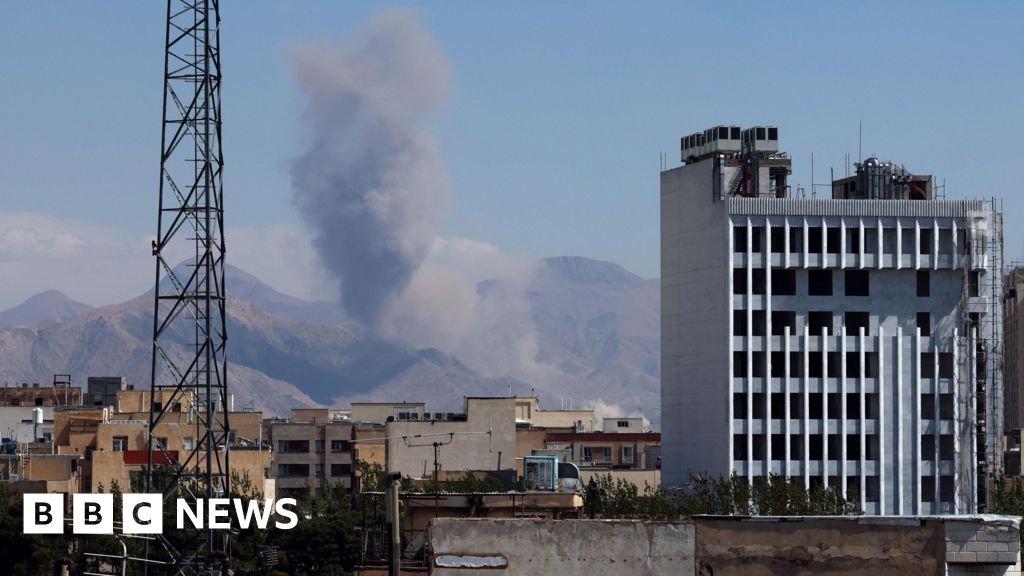
What the US military could do if Iran fails to meet Trump's ultimatum
The US can do a lot of damage to civilian infrastructure but military experts say it's not feasible to carry out all Trump's threats.
Written by

